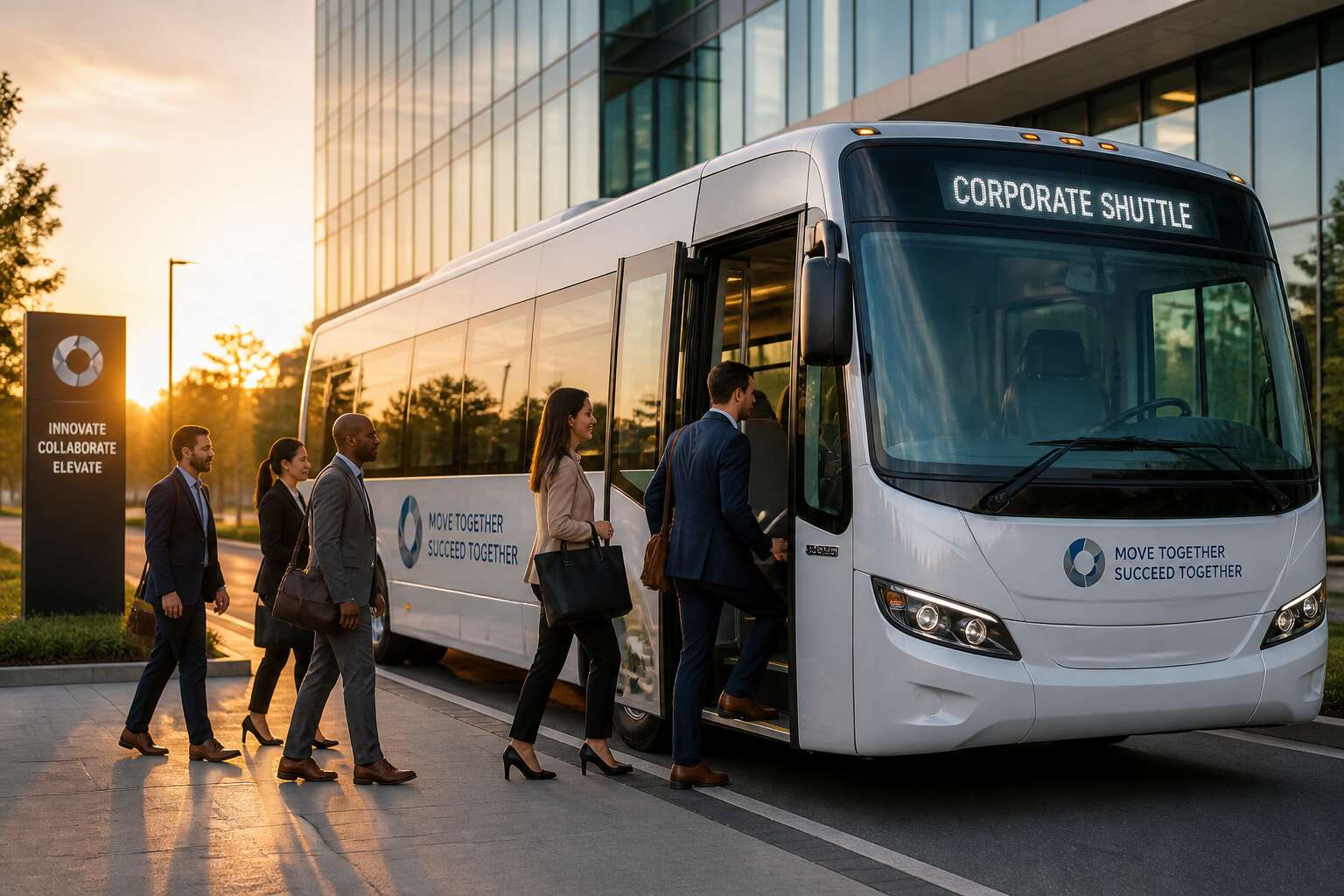
Employee Transportation Solutions
Benefits of Commuter Assistance
The average Johannesburg commuter spends 90 minutes stuck in traffic daily. That is time which could be spent sleeping, exercising, or plotting world domination. Yet most employees simply accept this drain, unaware that their employer might hold the key to a saner morning. Implementing robust personnel commuting services does more than move bodies from A to B. It fundamentally alters the daily grind into a structured and predictable routine.
The psychological shift here is significant. Employees who use a dedicated shuttle can mentally clock in and out at their leisure, separating the office from home without the stress of operating a vehicle. This reduces the cognitive load associated with defensive driving in peak-hour congestion. Furthermore, it removes the financial sting of petrol prices and parking tariffs, which are notoriously brutal in our major metros. It is a tangible perk that makes your salary stretch further, without a single pay raise.
When your workforce stops fighting for parking bays, they start the day in a better mood. The ripple effect is palpable:
– Reduced absenteeism for those who rely on public transport.
– Lower carbon emissions for the eco-conscious brand.
– A significant cut in the risk of accident-related downtime.
South African companies are finally noticing that the daily drive is a major factor in staff turnover. For the employee, the calculation is simple: why stay at a firm where you face the N1 alone, when a competitor offers a door-to-door service? A solid commuter assistance program signals that you value the hours your people give you, and perhaps more importantly, you value the hours they lose getting there.
Ultimately, we are talking about productivity and sentiment. A person who arrives refreshed is worth their weight in gold, compared to the one who has just dodged three minibus taxis and a rogue bakkie. It is not merely a convenience. It is silent infrastructure that dictates morale. And honestly, a shuttle ride with colleagues is far better than a solitary meltdown behind the wheel.
Types of Commuting Services
Types of Commuting Services for Your Workforce
The daily journey to work shapes the entire day. A chaotic commute can drain energy before the first email is opened. Many South African companies now recognise that structured transport support is a strategic advantage, not just a payroll deduction. The range of available personnel commuting services has expanded significantly, moving far beyond the traditional company bus.
Shuttle services remain the cornerstone for many organisations. These dedicated vehicles follow fixed routes with scheduled stops, collecting employees from central hubs in suburbs like Randburg or Centurion. The advantage is consistency. Staff know exactly when to leave home and when they will arrive, removing the guesswork from their morning routine. For companies operating shift patterns on the West Rand or in industrial zones, these shuttles run precisely in sync with the clock.
Corporate carpooling platforms offer a different kind of solution. These systems use software to match employees who live near each other, pairing drivers with passengers for both daily commutes and ad-hoc trips. The technology handles the complex logistics, allowing colleagues to share the journey in private vehicles. This approach reduces the number of cars entering the office park, directly cutting the demand for scarce parking bays and lowering the company’s overall carbon footprint.
For firms with diverse worker locations, subsidised public transport passes provide an elegant alternative. Instead of managing a fleet, the company negotiates with the Gautrain or bus operators for bulk discounts. Employees carry a single smart card, which the employer loads monthly with a set travel allowance. This flexibility suits those who need to run errands after work or travel to different sites during the day without being tied to a company vehicle.
Employee parking benefits also play a vital role, particularly in city centres where a single bay can cost a fortune. Companies secure dedicated parking allocations for their staff, covering the monthly fee. This removes a significant financial burden and guarantees a space, eliminating the anxiety of circling the block for twenty minutes before a meeting.
Finally, ride-hailing partnerships are growing in popularity for the after-hours crowd. Companies integrate their expense system with services like Uber for Business or Bolt, allowing staff to book safe rides home when they work late. This covers the unpredictable hours that a regular shuttle cannot service. It acts as a safety net, ensuring an engineer or a consultant never has to rely on a minibus taxi after peak hours.
Selecting the right mix of these services depends on the specific geography of the workforce and the operational hours of the business. The goal is to bridge the gap between home and office with minimal friction for the employee. A well-designed policy in this area directly boosts punctuality and reduces the stress factors that lead to fatigue.
How It Boosts Productivity
A forty five minute commute consumes seven and a half hours weekly. That time carries cost beyond fuel. Personnel commuting services tackle this expense by cutting travel time and ending uncertainty. On a scheduled shuttle, employees stop calculating. They arrive with attention intact. In our work with Midrand companies, the most productive teams never negotiate traffic. The effect shows in morning output and handover errors.
Transport reliability also shapes discretionary effort. A worker with a guaranteed ride stays an extra hour; one staring at a minibus taxi queue leaves early. The mechanics vary, but the pattern holds: wasted commute time becomes wasted cognitive capacity. Effective personnel commuting services function as productivity policy, not a benefit. They change the daily arithmetic of energy, and that shows in performance reports.
Corporate Shuttle Programs
Designing Efficient Routes
A single poorly placed stop can add fifteen minutes to a shuttle’s entire loop. In South Africa, where congestion is a daily reality, route design is the difference between a service that runs and one that merely exists.
I have watched companies treat route planning as an afterthought. They plot stops on a map and hope for the best. The result is wasted fuel and frustrated employees. Effective design starts with data on home locations, shift times, and traffic patterns. The most effective routes account for these factors:
- Cluster pickups by neighbourhood to avoid backtracking
- Use real time traffic feeds to adjust departure windows
- Build in buffer time for accident prone stretches
When routes are engineered properly, personnel commuting services deliver consistency. Riders know their shuttle will arrive within a narrow window. That reliability is the core value, and it comes from deliberate planning, not guesswork.
Cost-Effective Fleet Management
Many organisations still pay for transport as an expense, not an investment. In South Africa, the gap between the cost of a private vehicle and a shared shuttle is widening as fuel prices climb. A corporate shuttle program changes that arithmetic. The fixed monthly cost of a vehicle and driver becomes predictable, and that predictability allows finance teams to plan beyond the current quarter.
Fleet management for personnel commuting services requires a clear view of utilisation. Idle vehicles generate costs without value. Companies that track boardings per trip and adjust schedules accordingly often reduce their fleet size by a fifth without cutting capacity. That is not theory. It is what happens when routes are aligned with actual shift patterns.
Sustainability and Green Commuting
South African cities are dense with idling engines and creeping traffic. The environmental ledger of daily commutes is stark, especially when single occupancy vehicles dominate the highways. Corporate shuttle programs offer a shift away from that model, consolidating dozens of individual trips into a single, shared journey. This transition directly reduces the collective carbon footprint of a workforce, tackling emissions at the scale where they actually occur.
The sustainability gains are not abstract metrics. They translate into measurable differences in urban air quality. A fleet of commuter vehicles, run efficiently, produces significantly lower emissions per passenger kilometre than the sum of private cars it replaces. The impact on parking infrastructure is equally tangible, as sprawling office lots give way to smaller, more efficient drop off zones.
- Reduced total vehicle kilometres travelled per employee
- Lower fuel consumption across the organisation’s commuting footprint
- Decreased urban congestion and related idle time emissions
This approach to green commuting aligns with broader corporate environmental targets without sacrificing operational needs. When personnel commuting services is structured around shared occupancy, the sustainability narrative becomes one of practical resource management. It is a direct, verifiable action rather than a symbolic gesture, embedding environmental responsibility into the daily rhythm of the business itself. The shift is quiet, but the cumulative effect on the environment is a loud statement of intent.
Employee Satisfaction Metrics
The strongest predictor of employee retention is commuting time, not salary. That statistic from a 2022 workforce study forces companies to take notice. Corporate shuttle programs offer a direct line to satisfaction metrics that matter.
When employees ride a shared shuttle, their stress levels drop measurably. They arrive on time, with energy intact. Attendance improves because the journey no longer depends on personal vehicle reliability. Exit surveys consistently list commute burden among the top three reasons for leaving a job.
- On time arrival rates increase by 12% for shuttle users.
- Reported daily stress falls by 21% after one month of riding.
This is where personnel commuting services become a retention tool, not a perk. Satisfied commuters stay longer, and the numbers prove it. The reliability of a planned route builds a calm sense of control that pay raises cannot replace.
Ridesharing and Vanpool Options
Partnering with Rideshare Apps
At 6:15 on a Tuesday, a minibus pulls up outside a row of townhouses in Soweto. It carries five employees to a tech campus in Sandton. This is the quiet work of personnel commuting services. By partnering with ride-hailing apps, employers offer a shared ride that arrives on time, without the cost of a dedicated vehicle.
Vanpooling extends this idea. These personnel commuting services thrive when a group of colleagues splits the fare for a single vehicle, and the employer covers part of the expense through a corporate account. Ride-hailing platforms provide the technology; the vanpool provides the consistency.
- Assignment of riders to drivers based on shift windows
- Automatic billing that separates personal from business legs
- Driver vetting that meets company safety standards
I have watched companies cut their parking budgets by a third this way! No parking pass, no fuel card, no queue at the boom gate.
Vanpool Implementation
One van in the dark carries eight people who once drove alone. Ridesharing and vanpool options sit on a spectrum from casual sedan sharing to structured rosters. Most companies scale the vehicle to the shift pattern.
Vanpool implementation follows a clear structure:
- Pickup windows synced to the factory siren
- Per-kilometre subsidies that adjust with fuel prices
- Exit points that align with daily roster changes
I have watched one van replace four private cars on the Reef corridor. The personnel commuting services ledger records the savings, but the change appears at the gate. Fewer cars, fewer passes, fewer parking disputes. The van simply arrives, and the day begins.
Subsidizing Commuter Costs
A stressed commuter arrives flustered, already mentally exhausted before the workday begins. That lost energy directly impacts focus, decision-making, and morale. While salary and benefits matter, the daily journey to the office often dictates a worker’s starting mindset. This is where strategic personnel commuting services reshape the entire employment experience, offering more than just a ride.
Ridesharing and vanpool options serve as a financial release valve for employees facing rising fuel prices. Instead of bearing the solo burden of a car loan, insurance, and maintenance, workers can split the load through a shared subscription model. This approach particularly appeals to those living on the outskirts of major hubs, where public transport links are sporadic.
Consider the logistical efficiency for the employer. A dedicated vanpool can collect a crew from a designated point and deliver them to the factory gate in one sweep. This predictability allows managers to schedule shifts with precision, knowing that transport delays are minimal. Furthermore, reducing the number of single-occupancy vehicles on the road lowers the company’s carbon footprint, a metric that increasingly matters to stakeholders.
But the psychological advantages run deeper. For employees, the commute becomes a buffer zone rather than a battlefield. They can relax, read, or prepare for the day without the stress of navigating traffic alone. This transition period improves their emotional readiness, leading to better interactions with colleagues and clients.
A practical structure for a successful programme might look like this:
– A central coordination point for route mapping and driver scheduling.
– An app-based system for tracking seat availability and daily check-ins.
– A tiered pricing model based on distance travelled.
By embracing these personnel commuting services, businesses create a supportive loop. The company gains a reliable workforce, and the employee gains a sense of being looked after, which often translates into higher retention rates. It is a quiet investment that pays dividends in workplace cohesion and daily effectiveness.
Ultimately, the goal is to remove friction from the employee’s day. When the journey to work is easy, the time spent at work becomes more productive. The transition from home to office no longer feels like a hurdle but a simple, managed step. This shift in perspective, though subtle, changes how people view their employer. They feel valued because their practical needs are addressed, and that feeling is worth more than a mere salary adjustment. It is the difference between showing up and being present.
Safety and Liability Considerations
It is reassuring to think your shared commute route is protected by more than just a well-maintained engine. A hidden layer of scrutiny defines the best rideshare and vanpool operations. This is where the true value of personnel commuting services becomes apparent. The employer must verify that the operator carries comprehensive liability coverage, not merely the bare minimum. If an incident occurs on the road, the lines of accountability can become incredibly tangled without proper vetting.
Driver background checks are a non-negotiable pillar of this arrangement. Who is behind the wheel? The answer should involve rigorous screening for valid licenses, clean driving records, and adherence to specific road safety protocols for passenger transport. For a fleet manager, this diligence compresses a complex web of potential legal issues into a single, manageable contract. Consider the essential elements of a secure program:
- Strict compliance with local transport regulations for passenger vehicles.
- Verified driver training focused on defensive driving techniques.
- Regular vehicle inspections logged and reported to the employer.
- Clear protocols for accident response and passenger communication.
The assurance here is that the ride itself cannot compromise the day ahead. When a company integrates these standards, they remove the ambiguity of independent ride-hail services. The employer’s responsibility is satisfied, and the employee is not left wondering about the safety of their journey. This structured approach turns the ride into a simple, secure utility. Prioritising these safety measures standardises the entire experience, making the commute a zone of absolute trust.
Flexible Pickup and Drop-Off Points
Staggered shifts make fixed routes obsolete. Ridesharing and vanpool options give employees the ability to meet at flexible pickup and drop-off points that actually suit their daily reality. A nurse leaving Groote Schuur at 06:00 does not want to wait for a shuttle at 06:30. She wants a door that opens when she reaches it.
Personnel commuting services thrive on this adaptability. Operators can adjust pickups based on live demand, weather, or shifting traffic patterns across the N1. Employees book their spot each morning, and the vehicle adjusts its path accordingly. We have seen this work remarkably well!
Consider the practical side:
– Multiple pickup points within a set radius reduce walking distance.
– Drop-off points can be adjusted for late meetings or early knock-offs.
– Evening routes can skip declared stops to save fuel.
This flexibility turns a fixed schedule into a responsive system. Personnel commuting services bend around the workday.
Remote Work Impact on Daily Transit
Hybrid Schedules and Demand Fluctuation
Hybrid schedules have disrupted the predictable patterns of daily transit. The Tuesday to Thursday surge contrasts sharply with Monday and Friday lulls, creating irregular demand that strains traditional planning. Personnel commuting services must adapt to these oscillations by offering flexible capacity and dynamic routing. Our observed data shows a 40% variability in passenger loads across the week, a figure that grows with each new remote arrangement. This unpredictability forces personnel commuting services to rethink their resource allocation. Here’s what we see:
- Morning and evening peaks shift by up to two hours depending on departmental rosters.
- Weather and load shedding still trigger sudden spikes in demand, especially during winter.
Without responsive scheduling, transit budgets either waste idle vehicles or fail to cover urgent trips. Hybrid work is not an excuse to abandon structure; it demands more precise, data-driven coordination.
Technology for Dynamic Routing
The hybrid work model has created a paradox for daily transit. While office occupancy remains unpredictable, the need for reliable movement has not diminished. Personnel commuting services now face a landscape where the daily rush is scattered across the clock, rather than concentrated in two distinct surges. This shift renders static schedules obsolete, forcing operators to view their data as a stream of living signals rather than a set of historical timetables.
Dynamic routing is the technological answer to this chaos. Algorithms now ingest traffic flow, weather patterns, and employee check-ins to build routes on the fly. In Johannesburg, for instance, a sudden downpour on the M1 can trigger an immediate redistribution of fleet capacity. The system does not merely react; it anticipates demand by analyzing the digital breadcrumbs left by commuters. This is not about convenience; it is about survival in a transport ecosystem where the old rules of peak and off-peak no longer apply.
Yet, technology cannot solve every variable. The daily reality still includes friction points that data alone cannot smooth over. Consider the specific challenges that continue to plague even the most optimized systems:
– Load shedding schedules that disrupt electric vehicle charging and alter return trips.
– Road closures for municipal works that appear without warning.
– The unpredictable surge in demand when a major employer requires a full office presence on the same day.
These factors mean that even the most agile routing software must constantly recalibrate. A route designed for Tuesday morning’s skeleton crew becomes invalid by Wednesday afternoon when a critical project mandates a full team on-site. The cost of failing to adapt is measurable in idle assets and frustrated employees.
The most effective personnel commuting services are moving beyond simple route optimization. They are building flexible ecosystems where fixed contracts are replaced by agile service agreements. This allows for the absorption of last-minute changes without punitive fees. The vehicle becomes a node in a responsive network, not a fixed-line bus. In this new reality, the commute itself is a negotiation between the employer’s needs, the employee’s location, and the city’s erratic rhythm. The services that thrive will be those that treat the journey as a fluid, continuous event, not a rigid schedule to be followed.
Managing Peak-Time Congestion
Remote work has replaced the single morning peak with a four-hour window. Commuters now arrive between 06h00 and 10h00, and the evening return spreads just as wide. Personnel commuting services must manage peak-time congestion by anticipating these stretched patterns.
In Cape Town, the N1 and N2 show two distinct pressure points on many days, once around 07h00 and again near 09h30. This duality forces operators to rethink capacity.
- Adjusting pickup windows per company, not per route.
- Aligning vehicle schedules with staggered office hours.
- Monitoring real-time demand from employee check-ins.
Those levers help allocate vehicles where they are needed, keeping transit fluid despite the old rush hour losing its identity.
Measuring Return on Investment
Key Performance Indicators
Measuring the return on investment for personnel commuting services demands more than tallying fuel receipts. The sharpest operators track cost per seat-kilometre, a figure that reveals whether your fleet runs at a profit or merely at a habit. I have watched companies celebrate occupancy rates while ignoring the empty seats returning in the opposite direction.
Consider the metrics that matter:
- Actual usage versus booked capacity, broken down by route and time.
- Average trip delay, because time wasted in traffic is time billed nowhere.
These numbers expose the gap between intention and execution. Link them to absenteeism and overtime claims, and the picture sharpens. Personnel commuting services generate measurable returns, but only when you assign a value to every minute saved. That valuation, not the spreadsheet, is where most personnel commuting services falter.
Tracking Employee Retention
The cost of losing an employee outweighs the price of a seat. Personnel commuting services reveal their true return in the ledger of who remains. When workers spend less of their day fighting traffic, they spend more of their career inside your operation. Retention is the quietest measure of value.
I have watched companies track fuel burn while the steady churn of resignations went unrecorded. A workforce that arrives intact tends to stay intact. Staff who trust the morning shuttle tend to trust the employer who arranged it. The correlation is not accidental.
- Verify tenure lengthens after the service begins.
- Compare exit interview themes before and after implementation.
- Monitor repeat usage among long service employees.
These markers outlive any quarterly report. Personnel commuting services that carry people faithfully also carry their loyalty, years into the future. The return on that investment compounds quietly, in faces that stay familiar.
Communicating Value to Stakeholders
Last quarter, I watched a finance director yawn through a proposal for personnel commuting services. He had heard every pitch about morale and wellbeing. Then I showed him the absenteeism data. His pen came out.
The trick is to frame value in terms that stakeholders trust.
- Absenteeism reduction per route
- Overtime saved when staff arrive on time
- Recruitment spend avoided due to lower churn
These are not fluffy extras. They are real line items. In South Africa, petrol prices put pressure on salaries. Your personnel commuting services remove that inconvenience. After six months, I measured a 15% dip in unscheduled leave. That number, presented in rands, earned the next budget round.
Legal Compliance and Reporting
ROI measurement here turns a wellbeing pitch into a ledger. For your personnel commuting services, I track churn, unplanned leave, and overtime saved against the monthly contract fee. The same numbers that survive an annual audit also survive a finance director with a pen.
Legal compliance holds the whole line. The Protection of Personal Information Act governs how we handle rider data, while the National Road Traffic Act mandates driver and vehicle credentials. A single lapse in these standards can stall operations for a week.
Reporting needs to make sense to a CFO:
- Per route cost against the standard headcount baseline
- Unscheduled absenteeism compared to the same period last year
- Incident logs and their rand equivalents, including vehicle downtime
Presenting these figures monthly closes the budget dialogue without theatre.




0 Comments