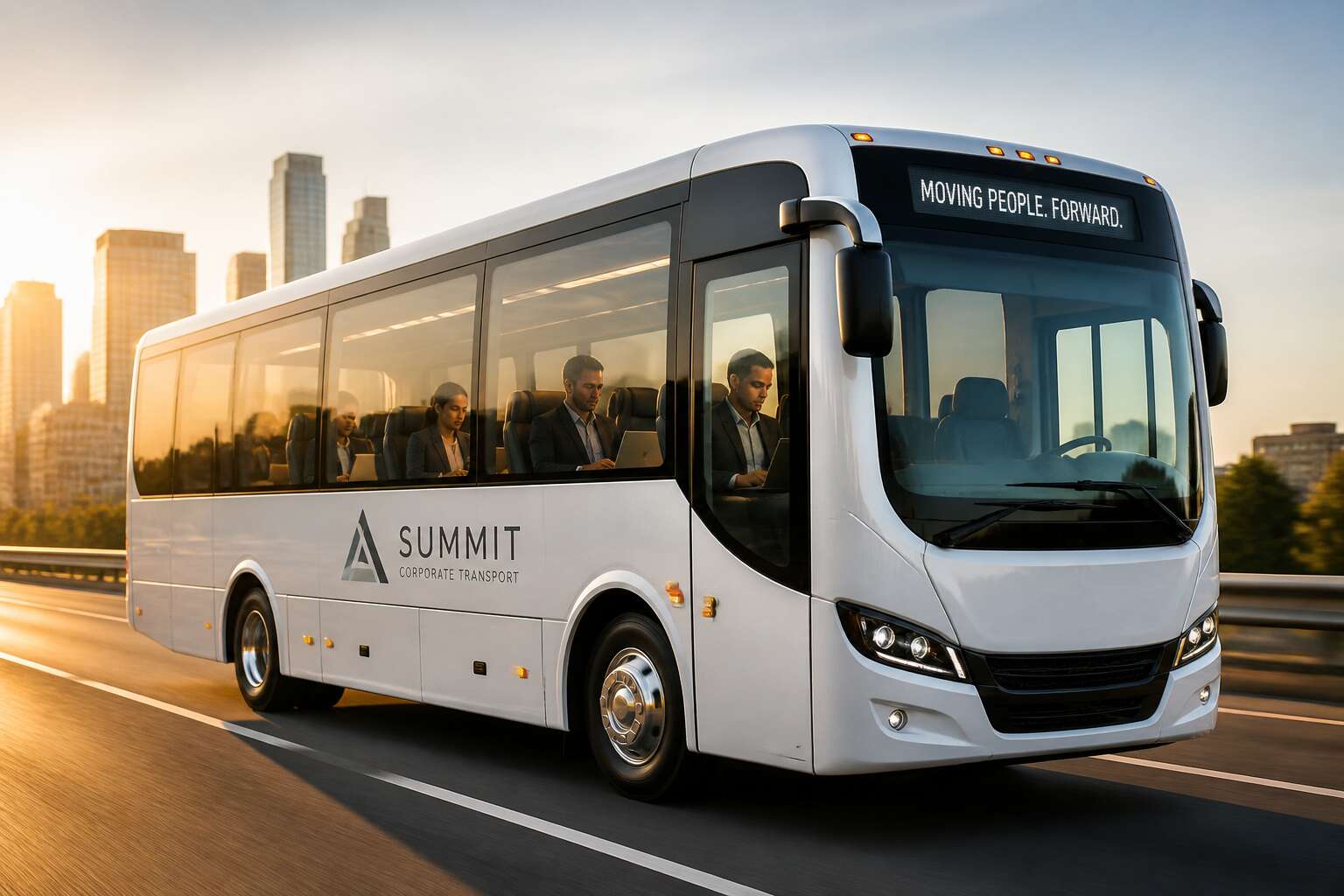
Core Advantages of Organized Employee Travel
Enhancing Job Satisfaction and Loyalty
The daily commute is often a source of quiet friction, a daily grind that chips away at a worker’s morale before they even sit down at their desk. When a company removes that friction with staff transport services, they are not merely providing a ride. They are signaling that an employee’s time and well-being hold tangible value. This unspoken acknowledgment is the bedrock upon which genuine organizational loyalty is built.
A well-managed shuttle fleet transforms the start and end of the workday from a frantic scramble into a predictable transition. Employees use that reclaimed time to prepare for meetings or decompress after a stressful shift. This reduction in daily stress is a palpable benefit that resonates more deeply than a generic employee appreciation week or a poster on the breakroom wall.
Consistent, reliable transport also eliminates the anxiety of late arrivals and the financial drain of fuel costs. This is particularly potent in regions where public transit routes are sparse or where ride-share pricing fluctuates wildly. The fiscal relief provided by a company shuttle is a concrete addition to an employee’s disposable income.
The psychological impact of this benefit cannot be overstated.
– It instills a sense of security, knowing that a seat is guaranteed and the driver is vetted.
– It fosters a micro-community, allowing colleagues to interact in a neutral, relaxed environment before the workday begins.
– It demonstrates a commitment to punctuality, where the company takes responsibility for a key logistical variable.
Ultimately, these factors coalesce into a feeling of being cared for that a salary figure alone cannot purchase. Employees who feel their employer understands their daily struggle are far less likely to entertain offers from competitors. The return on investment for staff transport services is measured not just in reduced turnover, but in the quiet, consistent presence of a workforce that arrives ready to contribute. This daily commitment to their comfort is a powerful contract of mutual respect that binds talent to the organization for the long haul.
Cutting Down Commute Hours
The average Johannesburg commuter loses more than a week each year to peak hour gridlock. That time vanishes into brake lights and idling engines. Staff transport services reduce this unproductive time by absorbing the variables drivers cannot control: traffic variance, parking scarcity, and route inefficiency.
When employees board a dedicated shuttle, the journey becomes finite. A professional operator consolidates the route, so staff transport services remove the guesswork from arrival times. One vehicle carrying thirty people pulls thirty separate vehicles off the arterial roads during peak windows.
- Carpool lanes bypass the worst congestion on major arterials.
- Fixed departure slots eliminate the uncertainty of trip planning.
- Proximity drop-offs remove the final walking slog.
The result is a workforce that arrives with energy intact. Where congestion costs the economy billions annually, that reliability is a measurable advantage.
Supporting Corporate Sustainability Goals
Corporate fleets account for a significant share of South Africa’s urban emissions. Organized employee travel embeds sustainability into daily operations without forcing staff to change their habits. Staff transport services replace multiple single-occupancy vehicles with one shared shuttle, cutting per-passenger emissions dramatically.
- Lower fuel consumption across peak commuting windows.
- Reduced wear on road infrastructure.
- Simpler pathways to electric or hybrid fleet implementation.
This model gives companies a measured sustainability metric, a verifiable reduction in scope 3 emissions, and an operational schedule that remains inherently efficient.
Selecting the Right Corporate Mobility Models
Company-Owned Shuttle Fleets
Selecting the right staff transport services model is a decisive operational step. Company-owned shuttle fleets offer unmatched control over routes and schedules. You dictate the exact departure times and can pivot quickly.
However, owning vehicles ties up serious capital. You are responsible for maintenance, insurance, and driver licencing. For many South African businesses, the 24/7 admin burden becomes a distraction. Weighing this against a managed staff transport services solution requires clear-eyed maths.
- Capital expenditure versus predictable monthly fees.
- Internal driver recruitment versus vetted external operators.
- Fleet customisation versus standardised vehicles.
I find that the right choice depends on your operational size. A rigid, company-owned fleet is powerful, but only if you have the volume to justify it. Otherwise, a flexible outsourced service provides the same reliability without the depreciation headache. Get the model wrong, and you lose money weekly. Get it right, and your entire operation runs seamlessly!
Outsourced Charter and Coach Services
Most corporate fleets sit idle for hours each day. Outsourced charter and coach services change that reality. You procure vehicles by the trip, not by the year. This turns a capital burden into an operational expense with clearer forecasting.
For South African businesses, the appeal lies in elasticity. Demand spikes during harvests or retail peaks. A provider scales capacity overnight. Your staff transport services remain consistent without permanent assets. I have seen companies cut transport overhead by a third.
- route planning and security assessments
- driver screening and compliance checks
- breakdown response and replacement units
These elements sit with the operator. Your management team stays focused on core output, not tyre rotations. Outsourcing returns control through simplicity.
Commuter Benefit Programs with Transit Agencies
A transit agency partnership can move a thousand employees daily, a capacity most private fleets cannot approach. Transit agencies across South Africa offer pre-tax deductions, subsidised passes, and employer sponsored travel cards. These models reduce commuting friction without requiring a single vehicle on your lot. I have seen companies adopt this and notice stronger punctuality and morale.
A successful programme usually requires several moving parts:
- Monthly audits of usage patterns
- Direct invoicing from the agency
- Clear employee eligibility tiers
These elements keep the partnership honest.
The key is to treat transit partnerships as a flexible layer beneath your existing staff transport services. Route adjustments happen with a phone call, not a fleet manager’s headache. For companies with scattered employees, this model provides coverage where fixed shuttles stop, making your overall staff transport services more resilient.
Employer-Sponsored Ridesharing Networks
On any given morning, most cars on Johannesburg’s highways carry a single person. Employer sponsored ridesharing networks put that empty seat to work. These programs match colleagues by geography and schedule, using software that learns commuting patterns over time. The result is a mobility layer that adapts weekly, not quarterly.
Ridesharing works best when companies provide clear incentives. Preferential parking for shared vehicles, guaranteed ride home options, and small daily stipends reduce the friction of participation.
Consider the operational benefits:
- Fewer parking spaces required
- Lower fuel reimbursement costs
- Reduced wear on the existing fleet
For organisations that already invest in staff transport services, a ridesharing network fills the gaps between fixed routes. It gives employees agency over their commute while keeping costs predictable.
Subsidized Parking or Mileage Reimbursements
Choosing between subsidized parking and mileage reimbursements is rarely a simple accounting exercise. In Sandton, a single reserved bay consumes R3,500 monthly before the engine starts. Mileage reimbursements, by contrast, pay for distance travelled, not distance necessary.
The two models generate different behaviours. Parking encourages employees to remain on site. Reimbursements reward driving, including trips that could have been avoided.
Neither option suits every workforce. Some employees genuinely need vehicles during the day. Others require a dependable route to a fixed site. The blended approach we have observed pairs staff transport services for routine commuting with reimbursements for ad hoc routes. That split reconciles competing needs, and we have watched it hold for companies we advise in Johannesburg and Durban!
Integrated Mobility-as-a-Service Platforms
Selecting the right corporate mobility model is not about picking the cheapest line item. It is about aligning with how your team actually moves. In Johannesburg and Durban, we have seen companies shift from fixed allowances to integrated platforms that combine multiple transport modes. These platforms aggregate data, routes, and billing into a single dashboard. They allow you to mix shuttles, ride-hailing, and even public transit within one policy. The result is a more flexible system that adapts to daily demand.
When evaluating these integrated mobility-as-a-service platforms, consider three factors:
– Depth of integration with your existing HR and finance systems.
– Ability to enforce policy rules in real time.
– Quality of reporting for audit and optimisation.
A platform that scores well on these points will reduce administrative overhead and improve user adoption.
Remember that staff transport services are not a one-size-fits-all solution. Your sales team may need on-demand rides to client sites, while your warehouse staff require scheduled shuttles. A unified platform lets you set different rules for each group. It also gives employees a single app to book and track their journeys. This convenience drives higher usage rates and more accurate cost tracking. Such flexibility is exactly why modern staff transport services rely on platform-based management.
In our experience, the smoothest rollouts start with a pilot in one department. Measure travel time, cost per trip, and employee satisfaction. Then expand gradually. The best platforms support this phased approach without requiring a complete overhaul of your transport policy. The right model is one that balances control, flexibility, and visibility. That balance is what turns a transport expense into a strategic asset. For many businesses, the key is to use a platform that can manage all staff transport services in one place, from scheduling to expense reporting.
Designing a Seamless Workforce Commute Program
Surveying Employee Origin and Destination Needs
A workforce scattered across Soweto, Sandton, and Midrand cannot share a single route. Designing a seamless workforce commute program begins with granular data, not guesswork. Origin and destination surveys capture the actual pattern of daily movement. We ask employees to plot their start points, transfer hubs, and preferred arrival windows, then cross reference those responses against shift rosters and public transport timetables.
The results often surprise. One client discovered that 30% of staff lived within two kilometres of the same Gautrain station. Another found that night shift workers needed pickups at 10pm, not the assumed 6am. These insights directly shape vehicle sizing, routing, and scheduling for your staff transport services.
Mapping Optimal Routes and Timetables
The average Johannesburg employee spends 58 minutes in transit each way, a daily ritual that erodes both energy and morale. Mapping optimal routes is an exercise in patience, a forensic examination of the city’s pulse.
We begin by overlaying the origin data onto a digital cartography of the region. The function is to find the quiet intersections where timetables merge with human need. We sequence stop orders to reduce dwell time between Soweto and Sandton, using phased departures rather than a single exodus. The data points we rely on include:
– Recurring geographic clusters that appear at 15 minute intervals
– The split shifts that require a second vehicle turn at midday
– The preferred drop zones that are closer to the factory floor than the main gate
A route is only as good as its syncopation with the clock. We calculate the exact minute a shuttle must leave Midrand to catch a production line changeover. The timetable becomes a living document, adjusted when patterns shift. Efficient staff transport services depend on this constant recalibration, a dance between the concrete and the scheduled.
Selecting Vehicles and Amenities
Nothing erodes trust in staff transport services faster than a broken seatbelt. Vehicle selection is a safety decision first, a comfort decision second. We inspect floor heights for step up ease, aisle widths for movement at shift change, and tyre ratings for gravel roads. A 16 seater suits urban pickups; a 60 seater handles intercity runs.
Amenities deserve equal scrutiny:
- Three point belts, not lap belts
- Fresh air vents above every row
- Storage bins that close without slamming
The best programme anticipates fatigue. Drivers need ergonomic seats and clear sightlines. Passengers need stable handholds and readable route signs. When the fleet matches the terrain, the commute becomes a predictable segment of the day.
Launching a Pilot Phase and Gathering Feedback
The quietest hour in any commuting plan is the one before the first vehicle rolls out. That hour belongs to the pilot phase, the small-scale dress rehearsal that separates a theoretical route from a lived reality. For any organisation weighing up staff transport services, the pilot is not a formality. It is the first honest conversation between the schedule and the people who will wake up to it.
Launching a pilot means choosing a single corridor or a single shift, then running it with the full discipline of a permanent operation. You resist the urge to fixate on the destination. Instead, you watch the departure point at 06:10, you listen for the idle chatter that signals comfort rather than tension, and you observe how quickly the doors clear at the drop-off. The pilot gives you the permission to be imperfect, but only if you are watching closely.
That watching takes shape through deliberate feedback loops. Paper forms in the seatbacks rarely get completed. A short WhatsApp poll sent during the return journey carries far more weight. You ask specific questions: how many minutes early did the vehicle arrive, was the temperature tolerable, did the driver wait for the latecomer or pull away precisely on schedule. These details sound trivial until they accumulate into a pattern. One driver’s habit of leaving 90 seconds early is a recurring frustration. One choke point that adds eleven minutes in the afternoon is a route flaw, not a traffic accident.
There is a particular art to gathering this feedback without turning the commute into a classroom. The best responses come from anonymous channels, because a person who names a legitimate complaint will often soften it. When you offer a simple rating out of five for the overall experience, then follow it with one open text box, the honesty flows. It is also wise to collect feedback from the people who did not use the pilot. Their reasons, whether it is a misaligned pick-up time or a fear of the vehicle’s condition, are data points in disguise.
Consider the sequence that makes the pilot genuinely useful. You begin by publishing the exact timetable and vehicle number, then you run the service for two full weeks without changes. During that window, you simply collect. After the fortnight, you tabulate the responses and identify the top three friction points. You adjust, then you run another two weeks. Only then do you begin to scale the service across the wider workforce.
The pilot also serves the emotional side of the transition. Employees who have long battled minibus taxis or expensive fuel know exactly what they do not want. When you launch a trial of your staff transport services, you are telling them that their hour of travel matters enough to be tested. That message lands with quiet power. The driver becomes the face of the programme, and a driver who greets passengers by name, who remembers the regular stop, who keeps the cabin clean, turns a logistical exercise into a small daily dignity.
When the feedback comes back, and it will, you resist the instinct to argue with it. The pilot is not about proving that your plan is correct. It is about discovering the gaps between the map and the road. And in that discovery lies the real value of a well-designed commute. The vehicle is metal, the route is asphalt, but the trust is built one trip at a time. A thoughtful pilot phase, followed by honest listening, transforms a transport arrangement into a dependable rhythm that employees stop thinking about, which is precisely the point.
Operational Metrics and Financial Impact
Measuring Daily Boardings and Fill Rates
Here is the content item on operational metrics and financial impact:
Somewhere between the spreadsheet and the roadside, every staff transport services operation reveals its true character. We track daily boardings not because we enjoy arithmetic, but because those numbers expose the difference between a shuttle that serves a purpose and a very expensive mobile waiting room. A vehicle that rolls out at 60% capacity costs the same in fuel, insurance, and driver wages as one that is packed to the rafters. The math is unforgiving.
Fill rates act as the pulse of the entire system. When we see a Monday morning run carrying eleven people out of a 40 seat coach, we know the route planning has drifted off course. Conversely, a consistently packed bus on a specific leg tells us where the real demand lives. We also monitor financial impact by comparing the cost per seated passenger against subsidised parking or individual mileage reimbursements. The savings often dwarf the initial projections, but only when the data drives the decisions.
To keep the operation honest, we review a few core indicators:
– Average daily boardings per vehicle
– Load factor, which is the percentage of seats occupied
– Cost per passenger trip
– On time performance at each pickup point
– Peak versus off peak demand ratios
Chasing a perfect fill rate is a fool’s errand. Some slack is necessary to accommodate shift changes and unexpected overtime. But when the numbers fall below a workable threshold for several weeks, the route needs adjustment or the service needs a rethink. The financial case for staff transport services depends on this ongoing scrutiny. A subsidised shuttle that runs empty is not a perk; it is a leak in the budget. A shuttle that runs full is a strategic asset. We simply prefer to know which one we are paying for.
Analyzing Fuel and Maintenance Expenses
The spreadsheets often tell a richer story than the road itself. Metrics like boardings and load factors reveal whether a route serves a purpose, but the true measure of efficiency often lies in the operating ledger. Fuel and maintenance expenses form the largest variable costs for any fleet, and they fluctuate with driver behaviour, vehicle age, and route geometry.
Operational metrics translate directly into financial outcomes. A route with consistent fill rates reduces the cost per passenger trip, because the fixed expenses of running the vehicle are spread across more people. Conversely, a route running at half capacity still consumes the same diesel and requires the same scheduled servicing. The financial impact of a poorly planned route is not abstract; it appears as a line item that grows month on month.
Maintenance costs follow a predictable pattern but one that is sensitive to how a vehicle is used. Stop start traffic in urban centres wears brakes and clutches faster than open road driving. Idling at pick up points burns fuel without moving passengers. Driver behaviour, such as harsh acceleration, directly increases fuel consumption. These are not mysteries. They are variables that can be measured and managed.
The relationship between available seats and operational cost becomes clearer when comparing different types of journeys. A dedicated shuttle for a night shift may run with low occupancy because the employee pool is small. That service might still be cheaper than the overtime paid to cover a missed shift. The calculation is rarely simple. The point is that staff transport services must be assessed on total cost, not just the fuel gauge.
Efficient routing reduces distance travelled, which in turn reduces fuel burned and wear on components. Scheduled maintenance aligned with actual usage, rather than arbitrary dates, prevents breakdowns that require expensive emergency repairs. When these factors are tracked together, the financial picture sharpens. The difference between a well run operation and a costly one is often just a few percentage points in utilisation and a disciplined approach to vehicle care.
Estimating Time Saved per Employee
When you measure the time employees spend waiting for late shuttles or navigating inefficient routes, the numbers often shock. A 30 minute daily delay adds up to 130 hours per employee each year. For a team of fifty, that is over six thousand lost hours. Staff transport services that track on time performance and average journey duration reveal exactly where minutes vanish.
The financial impact becomes clear when you convert those hours into salary costs. A route that saves fifteen minutes per trip translates directly into measurable payroll savings. Tracking these operational metrics also highlights driver behaviour, such as unnecessary idling, which inflates fuel bills and maintenance cycles. The data does not lie. Once you see the hourly cost of poor scheduling, the case for optimising your staff transport services becomes compelling. No need for complex software, just a spreadsheet and a stopwatch.
Monitoring Absenteeism and Turnover Changes
The link between unreliable transport and absenteeism is often underestimated. When employees dread an unpredictable commute, they are more likely to take unscheduled leave. Tracking attendance patterns alongside your staff transport services reveals a direct correlation. A month of consistent shuttle delays will often show a spike in sick days. This pattern is a cost driver, not a coincidence.
Operational metrics also inform recruitment strategy. High turnover forces constant onboarding, which drains resources. A dependable commute is a retention tool. When workers feel their time is respected, they stay. Monitoring these changes over a quarterly period provides a clear picture of your return on investment. You see savings in reduced overtime cover and fewer temporary replacements.
The essential indicators to monitor include:
– The rate of sickness-related absences per department.
– The frequency of unscheduled absence following transport disruptions.
– The percentage of staff retention among regular shuttle users.
– The cost of temporary staff to cover absent employees.
Effective staff transport services directly reduce attrition costs. The expense of advertising roles, interviewing, and training new hires dwarfs the price of a well managed route. When you track turnover against transport reliability, the numbers become a powerful argument for maintaining a premium service. The savings appear in payroll, in productivity, and in the stability of your workforce. This is where the operational data provides a strategic edge.
Reporting Emission Reductions
A single missed shuttle can ripple through your bottom line. Operational metrics reveal where staff transport services either save or drain your budget. Track on-time performance, vehicle utilisation, and cost per trip. These numbers connect directly to financial outcomes.
When you measure absenteeism linked to transport delays, you see the true cost. Then add overtime cover and lost productivity. The pattern becomes clear. Reliable transport is not an expense, it is an investment.
- On-time arrival rate
- Cost per employee per month
- Absenteeism rate on transport days
Financial impact reporting turns raw data into decisions. It shows which routes need adjustment and which schedules deliver value. Review these metrics quarterly. Your bottom line will thank you.
Navigating Legal and Security Obligations
Complying with Transport Licensing Laws
Navigating South Africa’s transport licensing laws demands more than a casual glance at the regulations. Every employer operating staff transport services must secure operator cards, verify driver qualifications, and maintain roadworthy certificates. The Administrative Adjudication of Road Traffic Offences Act adds another layer, imposing strict liability on operators for infringements committed by their drivers!
- Confirm all vehicles carry valid operating licences for the routes you run.
- Ensure drivers hold proper professional driving permits (PrDPs).
- Keep detailed records of vehicle inspections and driver vetting.
Security obligations extend beyond paperwork. Background checks on drivers and route risk assessments protect both employees and company assets. When operators fail to comply, the consequences include hefty fines, vehicle impoundment, and reputational damage.
Running Background Checks and Driver Training
Before a driver turns the key, the background check matters more. In staff transport services, a criminal record check is the start, never the finish. Verify the identity against the actual document, ask for the full employment history, and test every reference. A person who cannot pass this gate should never sit behind the wheel. The records, not the years of experience, guide the decision.
Driver training then carries that worker beyond the interview. Defensive braking, hazard prediction, and passenger procedures need regular practice. This is skill building, not a box to tick. Arrange half yearly refreshers and watch them during a live route. Never let the engine start the habit speak for itself.
Security obligations break down into repeatable items:
- Revalidate driver profiles every six months.
- Keep a dated log for each training session.
- Encourage passengers to report any concern directly.
Establishing Contingency Plans for Emergencies
I have seen too many companies treat legal and security obligations as a mere checklist. In South Africa, staff transport services must navigate the Protection of Personal Information Act when tracking vehicles, the National Road Traffic Act for vehicle standards, and strict labour rules on driver hours. A lapse in data handling or vehicle inspection can trigger shutdowns.
Contingency planning is equally critical. A breakdown on a remote highway or a security threat demands coordinated action. In my experience, a solid emergency plan includes:
1. A 24/7 control room that reroutes backup vehicles within minutes.
2. Pre-agreed protocols with local security firms and traffic authorities.
3. Documented steps for passenger evacuation and incident reporting.
Without these, a minor fault becomes a costly crisis. Your staff transport services should offer audit trails and scheduled emergency drills. That protects your people and your liability exposure, ensuring every journey is legally sound.
Managing Insurance and Civil Liabilities
Liability is a silent burden that many companies only feel when the worst has already happened. One incident on the road can unravel years of operational stability. Managing insurance and civil liabilities for staff transport services requires more than a signed policy. It demands a forensic understanding of where your exposure actually lives.
Corporate liability in South Africa is layered and unforgiving. You carry vicarious liability for driver negligence. You carry contractual liability for failed pickups. You carry regulatory liability under the National Road Traffic Act and the Compensation for Occupational Injuries and Diseases Act. Your insurance policy will only cover what the assessor can verify.
Consider the core layers of protection:
– Comprehensive vehicle insurance with passenger liability cover.
– Contractual indemnities with clear allocation of risk.
– Compliance certificates for driver fitness and vehicle roadworthiness.
Each layer requires documentation that can withstand legal scrutiny. Your staff transport services provider should maintain detailed records of inspections, driver qualifications, and incident histories. An insurer will scrutinise these records after an accident, not before. If the audit trail is incomplete, the claim collapses. That is the quiet risk that most companies overlook.




0 Comments